
KAHANI: PAINTED NARRATIVES OF INDIA Beyond the image: Discover the stories, histories and individual voices shaping India’s living painting traditions
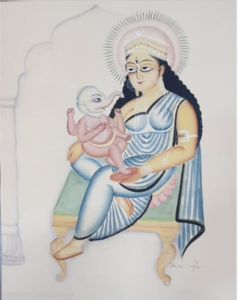
What if a painting is not merely an image to be admired, but a story waiting to be heard?
Across India, painting traditions have carried the memory of communities, the power of mythology,
the rhythms of everyday life and the changing realities of the world. Yet, when these works enter
galleries and museums, their intricate visual languages are often celebrated while the stories they
tell—and the artists who create them—remain less visible.
Kahani: Painted Narratives of India, presented by Sameksha at the IILM Centre for Arts & Ideas
(Sanatan), New Delhi, seeks to change the way we encounter these works. Curated by Minhazz
Majumdar, who brings over three decades of engagement with India’s folk and tribal artists, the
exhibition brings together nearly 60 works by 22 artists across ten painting traditions. It invites
audiences to look beyond colour, pattern and form to discover the narratives, cultural memories and
creative individuals that give these paintings their meaning.
At the heart of Kahani lies the understanding that painting and storytelling have long been
inseparable. From scroll painters who traditionally unfold their works while singing, to paintings
created for rituals, festivals and domestic spaces, these visual practices have served as ways of
remembering, communicating and interpreting the world.
In The Origin of Pattachitra, Mantu Chitrakar revisits a narrative associated with the beginnings of
the Pattachitra tradition. In Bada Dev ki Kahani Saja Ped ke Neeche Sunte Huye, Gond artist Vijay
Shyam portrays the act of storytelling beneath a Saja tree. These works offer an entry point into the
exhibition’s central idea: that a painting often holds a narrative extending far beyond what is
immediately visible.
Across traditions including Medinipur Pattachitra, Kalighat painting, Madhubani, Phad, Warli, Jogi
art, Gond painting and Mata ni Pachedi, artists draw upon inherited visual vocabularies to tell stories
rooted in mythology, spirituality, community and lived experience. Each tradition carries its own
histories, practices and ways of seeing, while remaining open to individual interpretation.
The exhibition challenges the notion that folk and tribal painting belongs exclusively to the past. The
artists represented in the exhibition demonstrate how inherited traditions can remain dynamic,
responsive and deeply engaged with the present.
Artists such as Pushpa Kumari bring questions of women’s rights, female foeticide and
environmental concerns into the Madhubani tradition. Mantu Chitrakar has expanded the narrative
scope of Pattachitra to include global events, human rights crises and social justice. Anil Chaitya
Vangad draws upon Warli ritual knowledge and ecological understanding while engaging with
contemporary events. Kalam Patua’s work continues to advance the Kalighat tradition through a
contemporary artistic sensibility.
These practices reveal traditions not as fixed forms to be preserved unchanged, but as evolving
languages through which artists interpret their times. Myths and inherited narratives coexist with
questions of environmental change, social realities and collective experience. The past becomes a
resource for engaging with the present.
A defining concern of the exhibition is the visibility of the artist as an individual creator. As
traditional painting practices reach wider audiences through galleries, museums, design and popular
culture, there is a risk that their makers become anonymous representatives of a collective heritage.
Kahani brings individual artistic authorship into focus. The artists represented here are not simply
custodians of inherited practices; they are interpreters, innovators and storytellers in their own
right. Their training, imagination, personal experiences and creative decisions shape how traditions
are carried forward.
The participating artists bring distinct journeys to this shared conversation. Kalyan Joshi, an
internationally recognised master of Rajasthan’s Phad scroll tradition, has received major honours,
including the National Award and Raja Ravi Varma Award. Sangita Jogi, a second-generation artist
from the Jogi tradition, is also the author of The Women I Could Be. Sanjay Manubhai Chitara
continues the sacred textile tradition of Mata ni Pachedi, while his sons Sumit and Vivek bring
contemporary ideas and visual references into the practice. Venkat Raman Singh Shyam draws upon
Pardhan Gond mythology while reflecting on global events.
Their individual practices demonstrate that continuity does not mean repetition. A tradition survives
because artists continue to interpret it, question it and find new ways to make it speak.
With Kahani: Painted Narratives of India, Sameksha and curator Minhazz Majumdar invite audiences
to approach folk and tribal art through a deeper engagement with the stories behind the images and
the people who bring them to life.
The exhibition encourages visitors to consider not only what a painting depicts, but also what it
remembers, whom it represents and how its meaning changes through the artist’s interpretation. By
bringing works and their makers into a shared conversation, Kahani offers a way to appreciate
India’s painting traditions beyond their aesthetic appeal and to recognise their continuing relevance
in contemporary cultural life.
At a moment when traditional art is finding new audiences and contexts, Kahani makes a compelling
case for looking more closely, listening more carefully and acknowledging the artists whose
creativity keeps these narratives alive.
WORKSHOP AND PROGRAMME DETAILS
As part of Kahani: Painted Narratives of India, Sameksha will host a series of public programmes that
extend the exhibition’s focus on living narrative traditions through presentations, workshops, a film
screening and conversations with artists and practitioners.
Thursday, 23 October | Presentation: Pattachitra Scroll Song with Mantu Chitrakar.
Friday, 24 October | Workshop: Pattachitra Scroll Painting Workshop with Mantu Chitrakar.
Registration required.
Tuesday, 28 October | Madhubani Workshop and Conversation: Madhubani Workshop with
Pushpa Kumari from 3:00–4:30 pm, followed by Pushpa Kumari in discussion with Minhazz
Majumdar from 5:00–6:00 pm. Registration is required for the workshop.
Thursday, 30 October | Film Screening: Legacy of a Painter (27 min), presented by Nutan
Manmohan, followed by a conversation with Minhazz Majumdar.
Registration is required for the workshops. Interested participants may register through the link or
QR code shared by Sameksha, or call the gallery for details.
Legacy of a Painter tells the largely untold story of Jangarh Singh Shyam, the Gond Pardhan artist
from central India. The film follows his journey from ink drawings to large murals, and his rise from
village artist to international recognition. It is presented by filmmaker and journalist Nutan
Manmohan. As part of Kahani: Painted Narratives of India, Sameksha will host a series of public
programmes that extend the exhibition’s focus on living narrative traditions through presentations,
workshops, a film screening and conversations with artists and practitioners.
